

Not Just Smart. Aware.
Most “smart homes” are really just a pile of separately smart gadgets. A thermostat that learns your schedule. A lock you can open from your phone. A sensor that texts you if the basement floods. Each device is clever on its own, but none of them know the others exist, and most of them are quietly phoning home to a company’s cloud server to do it.
ContainerSolutions homes were built to be different: not a house with smart devices in it, but a house that is itself a system, one that senses what’s happening inside it, makes decisions, keeps that data where it belongs, and gets smarter over time. This is standard, not an upgrade.
What “Smart” Actually Means Here
Every ContainerSolutions home ships with Home Assistant Green at its center, running locally, with no subscription required and no dependence on someone else’s cloud to keep working. From there, the home is wired for:
- Biometric lock and AI-enabled security camera at the entry
- Air-quality sensors tracking the invisible stuff: CO2, VOCs, formaldehyde, particulates, humidity, temperature
- HVAC control tied into the home’s comfort automations
- Solar and battery monitoring, so the home always knows how much power it’s generating and storing
- Automated lighting
None of this is bolted on after the fact or left for the homeowner to figure out. It’s configured and tested before anyone moves in.
Local First, By Design, Not by Accident
Here’s the part a lot of “smart home” marketing glosses over: most connected-home platforms are really data businesses. Your habits, your presence patterns, your energy use, all of it flows to a company’s servers, where it can be mined, sold, or exposed in a breach you had no say in.
ContainerSolutions homes run on Home Assistant precisely because it keeps control at home. Core functions run locally. There’s no dependence on a subscription or someone else’s server just to lock your door or run your ventilation system. Your home doesn’t need an internet connection to keep working, and it doesn’t need to hand your daily patterns to a stranger’s cloud to do its job.
That’s not a footnote. It’s a design principle: your home’s data belongs in your home, first.
A Home That Uses What It Senses
Sensors that just display numbers on a dashboard aren’t actually smart, they’re just instrumented. The difference here is that the data gets used to make real decisions, automatically.
The clearest example so far comes from the Core40 model home. It has an Energy Recovery Ventilator (ERV) that exchanges stale indoor air for fresh outdoor air while recovering most of the heating or cooling energy that would otherwise be lost. Originally, that system depended on someone remembering to turn it on. Watching real occupancy at the model home made it obvious that a manual system doesn’t get switched on reliably.
So the logic changed. The home’s energy system normally decides when to run the ERV based on solar and battery conditions, using free power when it’s available. But air quality doesn’t wait for good solar conditions. Now, if indoor air quality starts to move in the wrong direction, the home overrides its own energy-saving strategy and turns the ERV on regardless of solar state, keeping it on until conditions recover and stay stable. Efficiency by default, health when it counts.
That’s a small example of a bigger idea: the home doesn’t just collect data, it acts on it, in a way the team can point to, explain, and improve.
Learning Its Own Lesson About What to Trust
Part of building something explainable is being honest about it in both directions, including when the system finds its own mistake. While reviewing the air-quality data behind the ventilation logic at the model home, the team discovered that the original monitoring hardware wasn’t measuring several metrics independently. It was estimating some of them from a single underlying sensor to save on product development costs, in a way that produced dramatic-looking readings that weren’t defensible as real measurements. Rather than publish those numbers, the response was to pause any public claim built on them, order reference-grade replacement instruments, and adopt a standing rule going forward: any metric used publicly, or used to automate anything, has to come from its own dedicated, calibrated sensor. One sensor, one metric, nothing derived.
That’s the standard we want to be held to: measure, learn, improve, and only publish what can actually be defended.
The Platform Behind the Home: Anima
This intelligence layer has a name: Anima, from the Latin for “soul” or “breath of life.” It’s meant to capture what the system is actually for: a home that breathes (ventilation and air-quality management), senses (the sensor network), remembers (a structured event history), and responds with judgment rather than blind automation.
Anima is designed as a layered stack, with the homeowner only ever seeing the top of it:
- An AI Concierge that answers plain questions like “why is the ERV running right now?” or “is my air healthy today?” instead of dumping raw sensor logs
- Fleet intelligence that compares performance across homes and turns what it finds into improvements for everyone
- Predictive maintenance that flags degrading equipment before it fails
- An automation engine running versioned, documented decision logic for air quality, energy, comfort, security, and water
- A Flight Recorder, a structured, local memory of what the home decided, why, and what happened next
- Home Assistant doing the real-time local orchestration
- The connected systems themselves: sensors, HVAC, ERV, solar, battery, lighting, locks, and safety devices
The air-quality and ventilation module is the furthest along today, fully instrumented and logged end to end, and it’s the template the rest of the stack is being built to match. Comfort, energy, and security automations are already running and doing real work in ContainerSolutions homes, with that same level of logging and versioning coming next. That’s the roadmap: prove each piece in the field, hold it to the same standard, then build on it.
Getting Smarter Over Time, Without Giving Up Your Privacy
The most valuable thing about this platform isn’t any single automation. It’s that the whole fleet of ContainerSolutions homes is designed to learn together.
Here’s how that’s meant to work: patterns discovered in one home, like a better way to time ventilation, manage battery use, or squeeze more efficiency out of solar production, get validated against real data and then pushed out as improvements to every participating home. The system doesn’t just sit still after you move in. It’s meant to keep getting better, using lessons learned across the whole fleet, not just your own four walls.
Participation in that fleet learning is opt-in and anonymous. Your home doesn’t need to give up its privacy to benefit from what the fleet learns collectively; it contributes and receives improvements without your identity or your raw data ever being part of the trade. The goal is a home that gets more efficient every year you live in it, powered by a growing base of real-world data, without turning your household into a product.
Why Start at the Core40
Software built only in a lab can’t reproduce what a real, occupied home throws at it: real weather, real equipment quirks, real people coming and going, real failures. The best lab is the real world. The Core40 model home is where the platform is being proven first, hands-on, in a house ContainerSolutions controls end to end, from sensor placement to Home Assistant configuration to HVAC, ventilation, solar, storage, lighting, and security.
That’s the proving ground. The plan is to bring what’s learned there to every ContainerSolutions home, and eventually to offer this kind of home intelligence to other modular builders who want these capabilities without building the software themselves.
The Point of All of It
The best version of a smart home isn’t the one with the most gadgets bolted on. It’s the one that quietly understands what’s happening inside it, makes good decisions without being told, keeps its data close to home, and gets better every year without you having to lift a finger. That’s what “Smart” is meant to mean at ContainerSolutions: not an add-on, but part of how the whole home works.
Tomorrow Starts NOW.
A Smarter Way to Build Housing
Built faster, designed better, and engineered for long-term performance—this is housing reimagined.

Affordable
Predictable cost. Efficient design. Lower total cost of ownership.

Sustainable
Reuse of containers. Reduced waste. Energy efficiency.

Smart
Powered by Home Assistant Green. Local. Private. Intelligent.

Healthy Living
ERV ventilation. Air and water quality monitoring. A healthier home by design.

Storm Resilient
Steel structure. Stronger than traditional. Built for extreme conditions.

Solar
Solar-ready. Battery capable. Supports off-grid living.

Fast
Factory-built. Weeks, not months. Move-in ready on delivery day.
Our Models
ContainerSolutions focuses on truly scalable configurations that allow rapid, assembly-line like production for a wide variety of applications.

Pod20
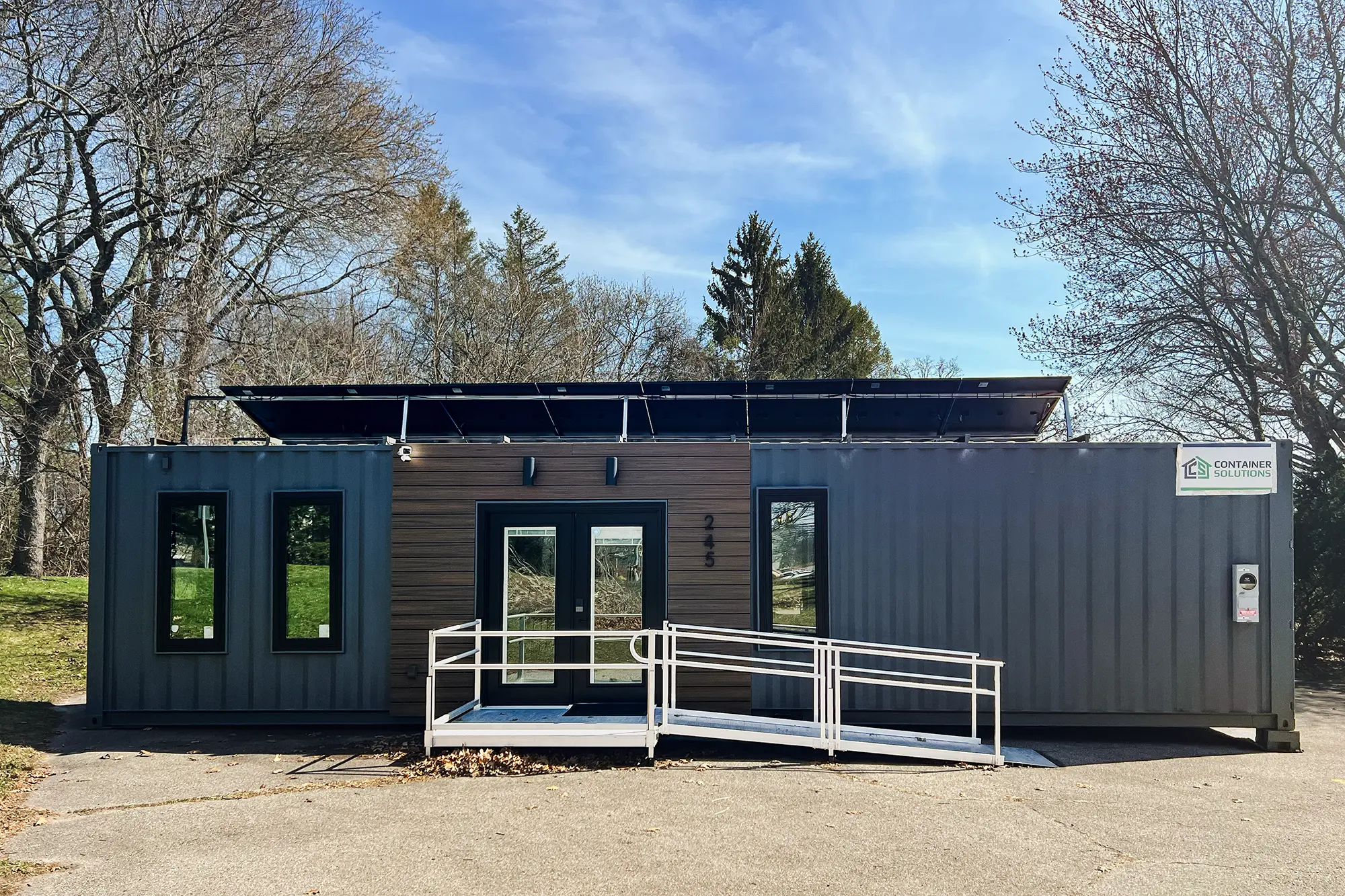
Core40
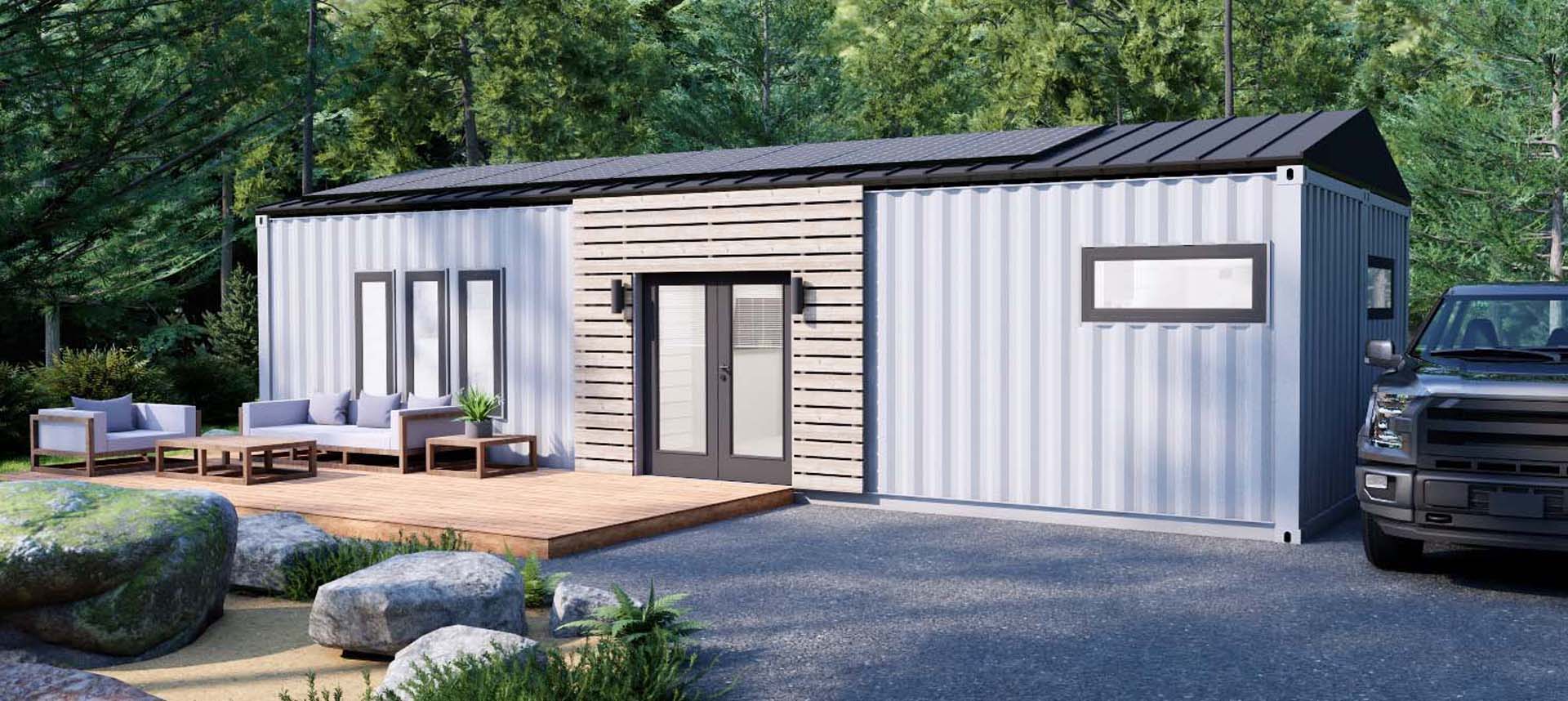
Flow80
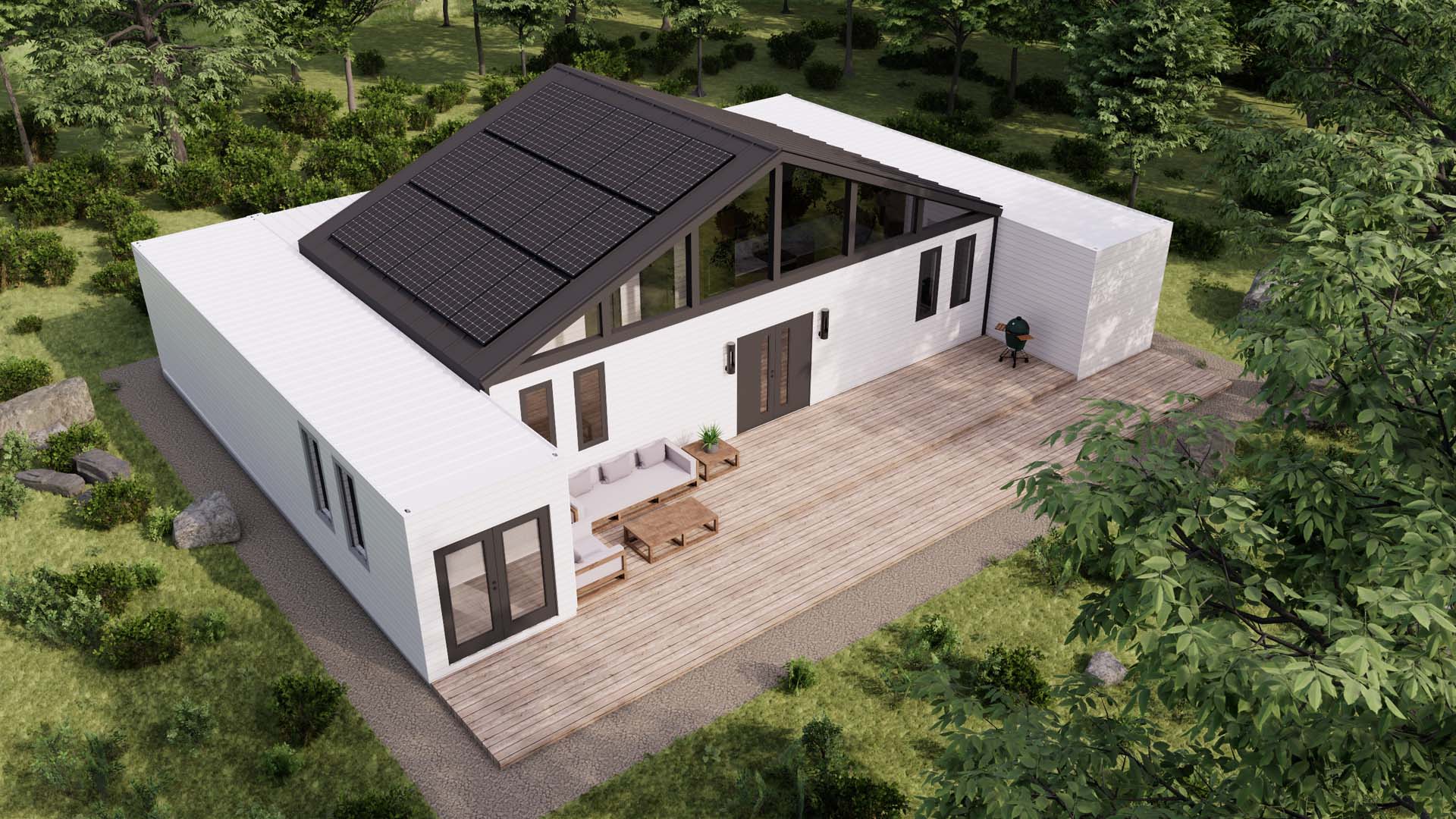
Cove120
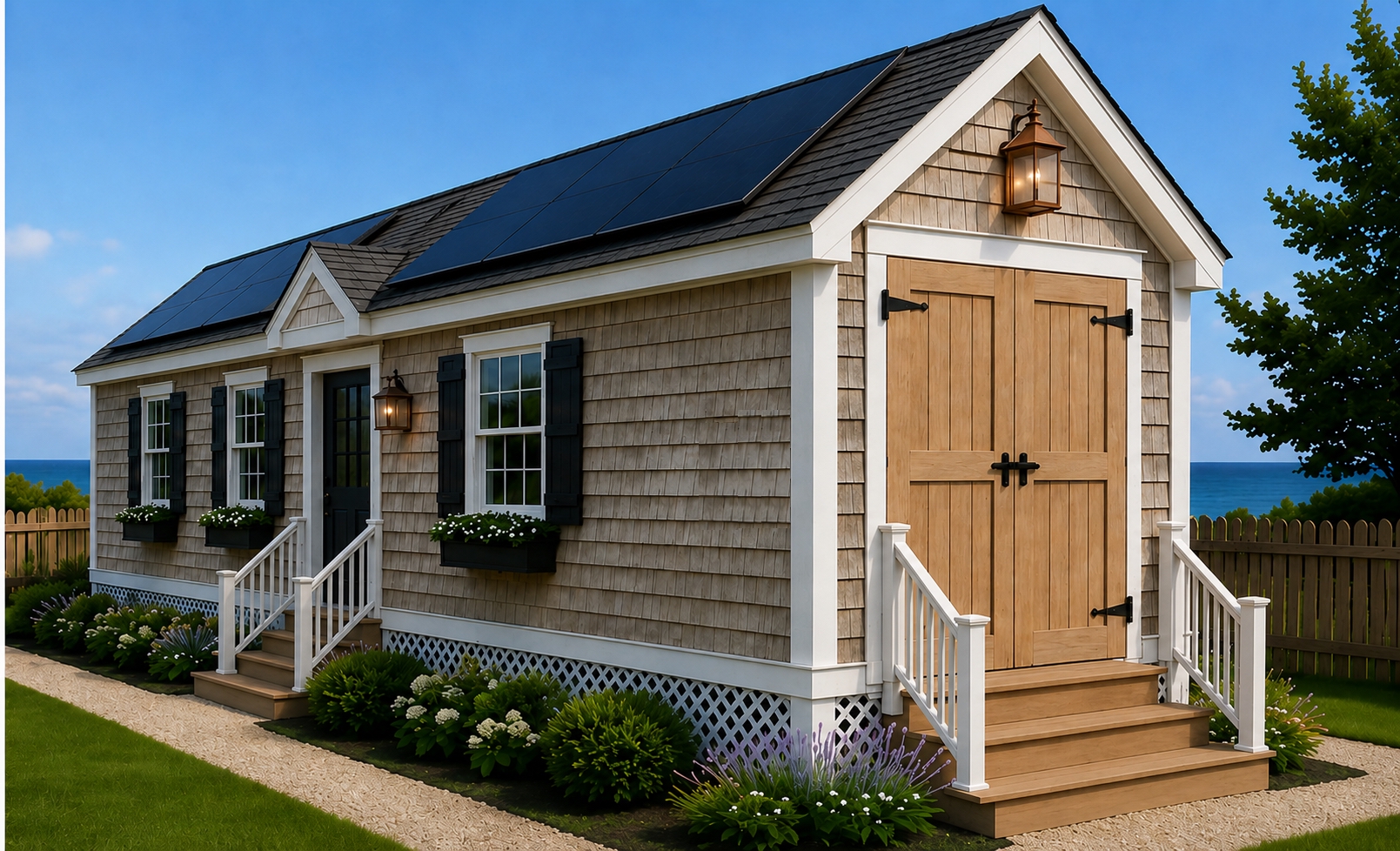
ACK40
Ready to Plan Your Project?
- (401) 903-0432
- East Providence, RI
To arrange a detailed quote, zoning analysis, or to book a tour of our flagship model located in East Providence, Rhode Island - check out our getting started page.
Have a quick question?
Ask us anything—we’re here to help. For prospective buyers, ask about our free Zoning & Site Review. We research your property's zoning, setbacks, and permitting requirements — and deliver a written report so you know exactly where you stand before committing to anything.