


Cost, Pricing & Financing
How much does a container ADU cost?
The cost of a container ADU depends on factors such as model size, finish selections, customization level, and site conditions. Site preparation, foundation work, and utility connections can also impact the final investment. During the planning process we review your property and goals so we can provide a realistic estimate before moving forward.
Are container homes cheaper than traditional ADUs?
In some cases they can be, but the final cost still depends on the project details. Container construction can reduce some structural costs, but site work, utilities, finishes, and customization all play a role in the final investment.
Can I get a traditional mortgage for a CS home?
Yes, with the right setup. Financing options are available for CS homes that are properly permitted, installed on a permanent foundation, and issued a Certificate of Occupancy. That’s exactly how CS homes are built and delivered. Financing requirements will vary with each lending institution. Some lenders are more familiar with non-conventional construction than others. Your CS team can help connect you with lenders who have experience with our homes.

Zoning, Permits & More
Do I need permits for a container ADU?
Yes. Like any residential structure, container ADUs must comply with local zoning regulations and building codes. Most projects require permits and inspections to ensure the structure meets safety and construction standards.
Can a container ADU be used as a rental unit?
Yes – ADUs in Rhode Island can be used as long-term rental units (30 days or more), making them a strong option for generating consistent monthly income. State law allows ADUs by right and supports their use as housing, but does not permit short-term rentals (such as Airbnb). We guide you through the local approval process to make sure everything is set up correctly before you build.
What if my town doesn’t allow them yet?
Some municipalities are still adapting their regulations to newer housing types like container homes. In some situations approval may still be possible depending on the design, zoning classification, and how the structure is permitted. Reviewing the property and local regulations early in the process helps determine what options are available. We can help you navigate this with your municipality.
Is a CS home approved for use in Rhode Island?
Yes-and this matters more than it might seem. ContainerSolutions holds full Rhode Island State approval through NTA factory inspections. NTA (National Technical Authority) is the same certification body used by the modular housing industry. No other container home company in our market has this statewide approval. Other builders go town by town, permit by permit, with uncertainty at every step. Your CS home arrives pre-approved at the state level.
What is NTA Certification and why is it important?
NTA (ICC NTA, LLC) is a RI state-recognized, third-party inspection and certification company that works inside the factory to ensure every home meets the ICC building codes required, matches approved plans, and is inspected throughout construction before delivery.

Timeline, Delivery & Installation
How are container homes delivered?
Container ADUs are typically transported by truck and delivered directly to the property. Specialized equipment such as cranes or heavy machinery may be used to place the structure onto the prepared foundation.
What site preparation is required?
All installations require a concrete foundation that breaks the frost line as the plumbing exits the container under the floor. This can be either a crawlspace or full basement.
Can container ADUs be placed in backyards?
Yes. Many container ADUs are installed in backyard areas of residential properties. Local zoning regulations may dictate setback distances from property lines or other structures.
In Rhode Island, there is a statewide ADU setback of 3 ft if the state’s ADU-by-right criteria are met. If those criteria are not met, local zoning has authority. Massachusetts does not have a statewide ADU setback rule like Rhode Island’s 3-ft standard—setbacks are primarily controlled by local zoning, with a newer state law limiting how restrictive towns can be, but it does not establish a fixed setback distance.
How long does the whole process take from order to move-in?
Traditional homes typically take ~10–14+ months from permitting to move-in (U.S. Census Bureau / NAHB). ContainerSolutions reduces the construction phase to just 8–14 weeks. Final timelines depend on local permitting, utility connections (electric, water, sewer), and inspections—factors that apply to any home build.
What kind of foundation does it sit on?
Your CS home is installed on a permanent foundation that extends below Rhode Island’s frost line (3.5 to 4 feet deep). This prevents frost heave, keeps your plumbing protected from freezing, and importantly classifies your home as real property, which is required for traditional mortgage financing. The container is permanently bolted or welded to steel plates embedded in the concrete foundation.

Design, Customization & Smart Home
Can container homes be customized?
Yes. While we offer standard models, many features can be customized depending on the project. Layout options, interior finishes, fixtures, and exterior design elements can often be adjusted to better fit the homeowner’s needs.
What sizes are available?
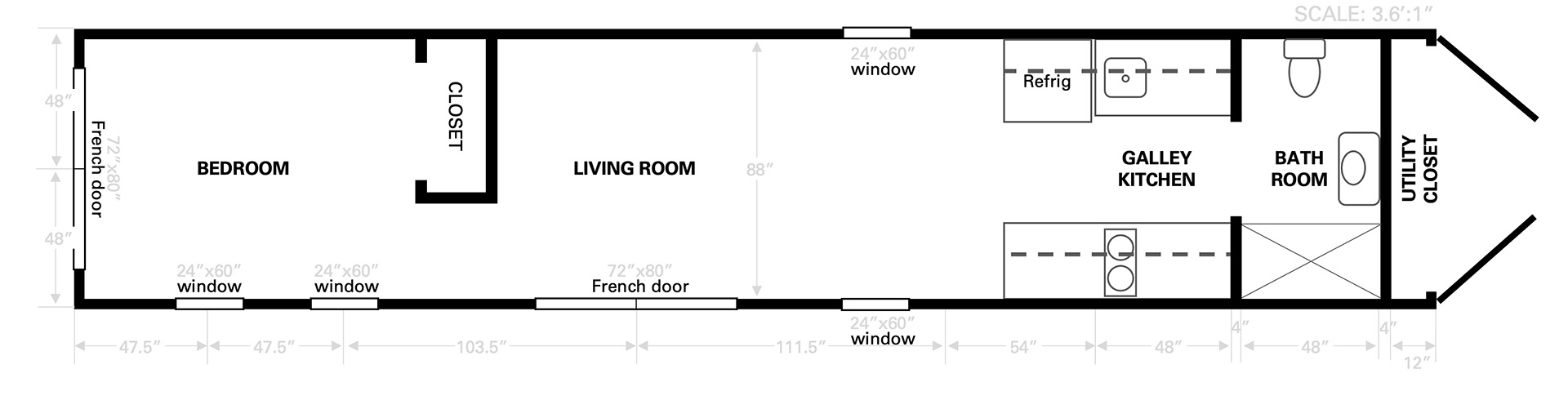
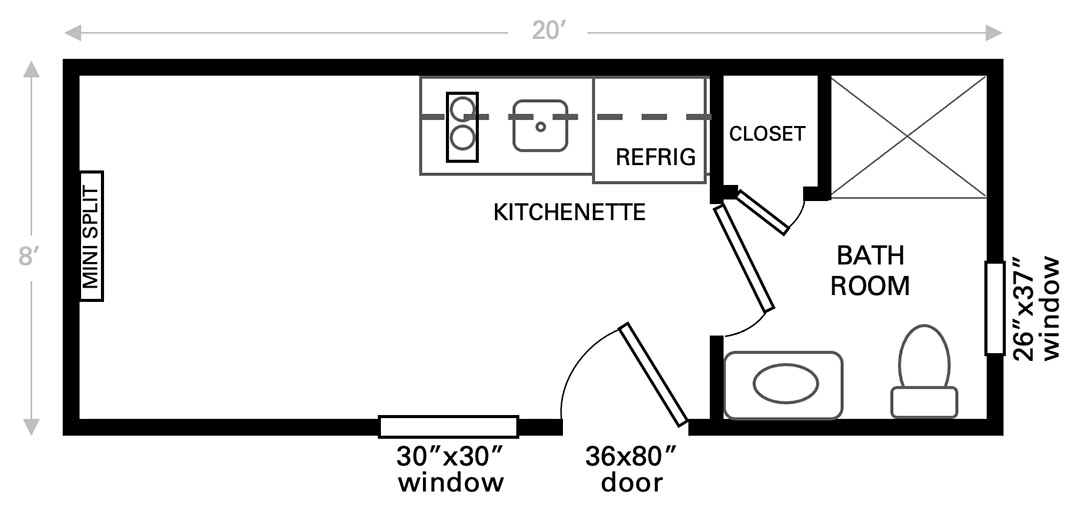
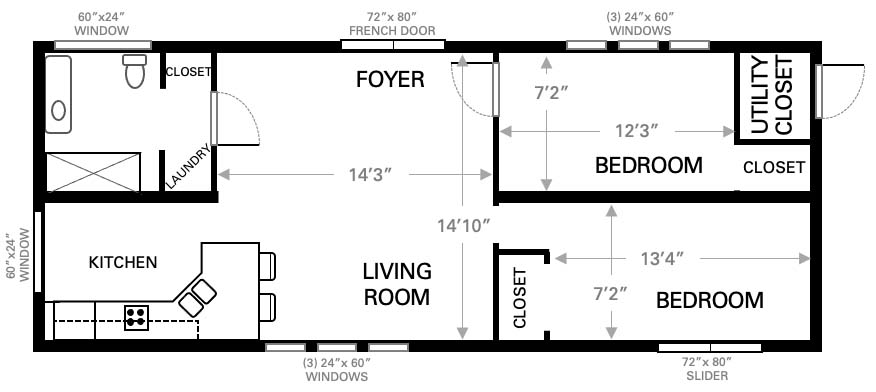
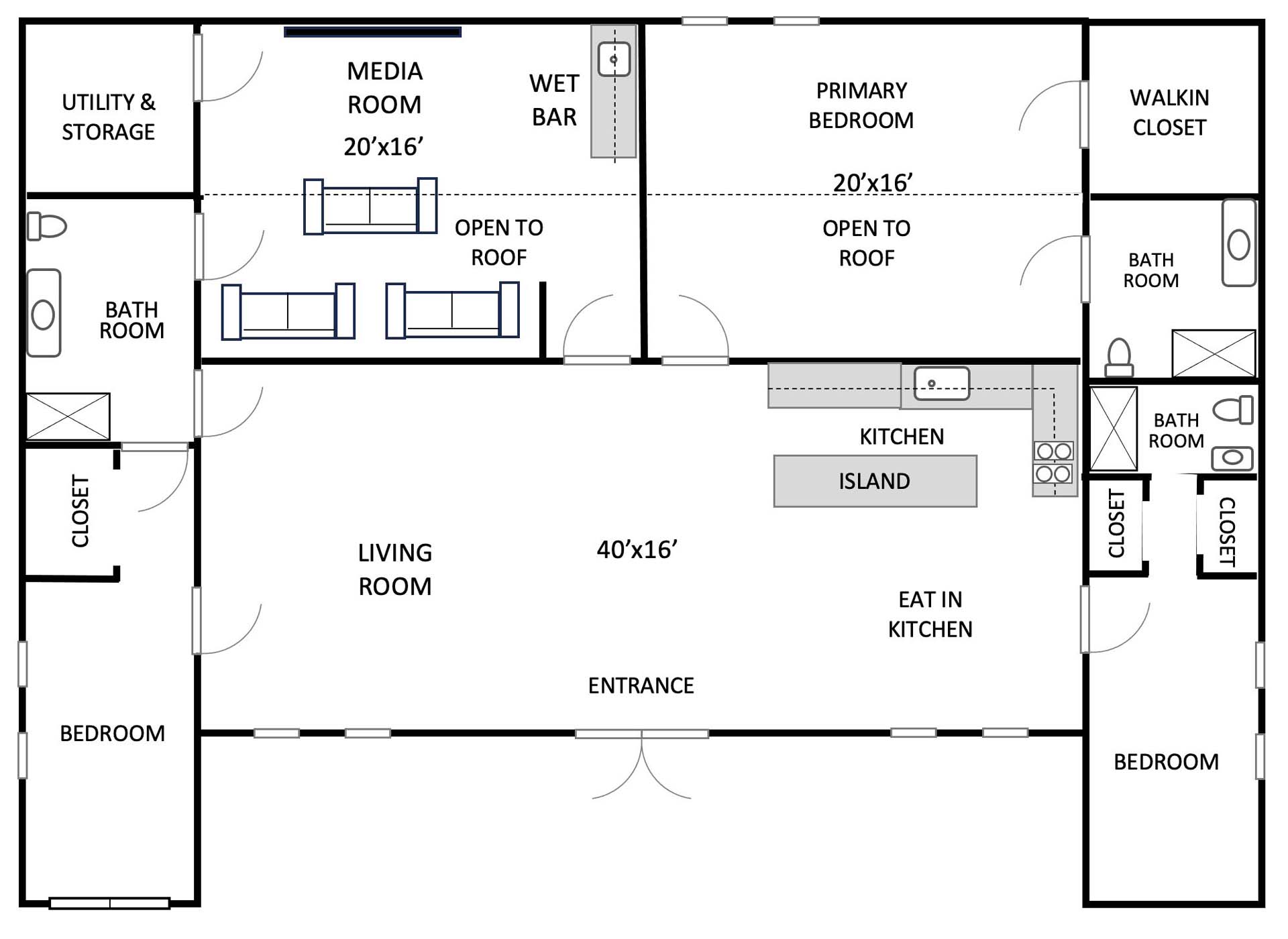
Our container homes are built from 20-foot or 40-foot High Cube shipping containers, and multiple containers can also be combined to create larger layouts or more complex designs.
What smart home features are included?
Every CS home runs on Home Assistant – a local, privacy-first smart home platform. Unlike systems that depend on the cloud or charge monthly subscriptions, Home Assistant runs on hardware installed in your home. Your automations, controls, and monitoring work even during internet outages. What’s included: smart thermostat, smart locks, lighting control, energy monitoring, and integration with the built-in air quality sensors. The platform is open and expandable you can add devices over time without switching ecosystems. Research shows most renters and homeowners will pay a meaningful premium for smart home features. CS includes them as standard.

Utilities, Solar & Energy Savings
Do container homes connect to normal utilities?
Yes. Container ADUs can connect to standard utilities including electricity, water, sewer, and internet service just like a traditional residential structure.
Can container homes be off-grid?
Yes, they can be designed with off-grid systems such as solar power, battery storage, and alternative water solutions depending on the goals of the project.
Does the home come with solar panels?
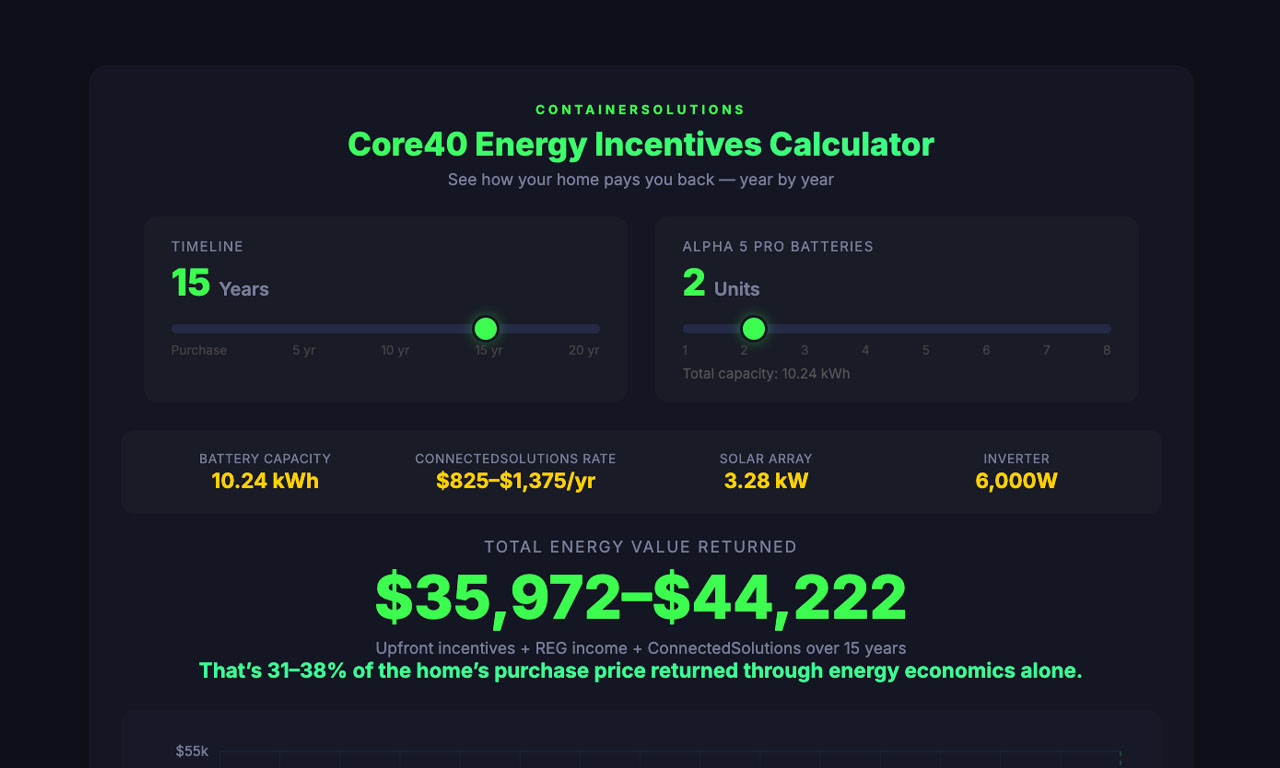
Yes—solar and battery storage are standard in every CS home, not an add-on. The Core40 includes a 3.28 kW solar panel array, a 10.24 kWh LiFePO₄ battery, and a 6,000W inverter.
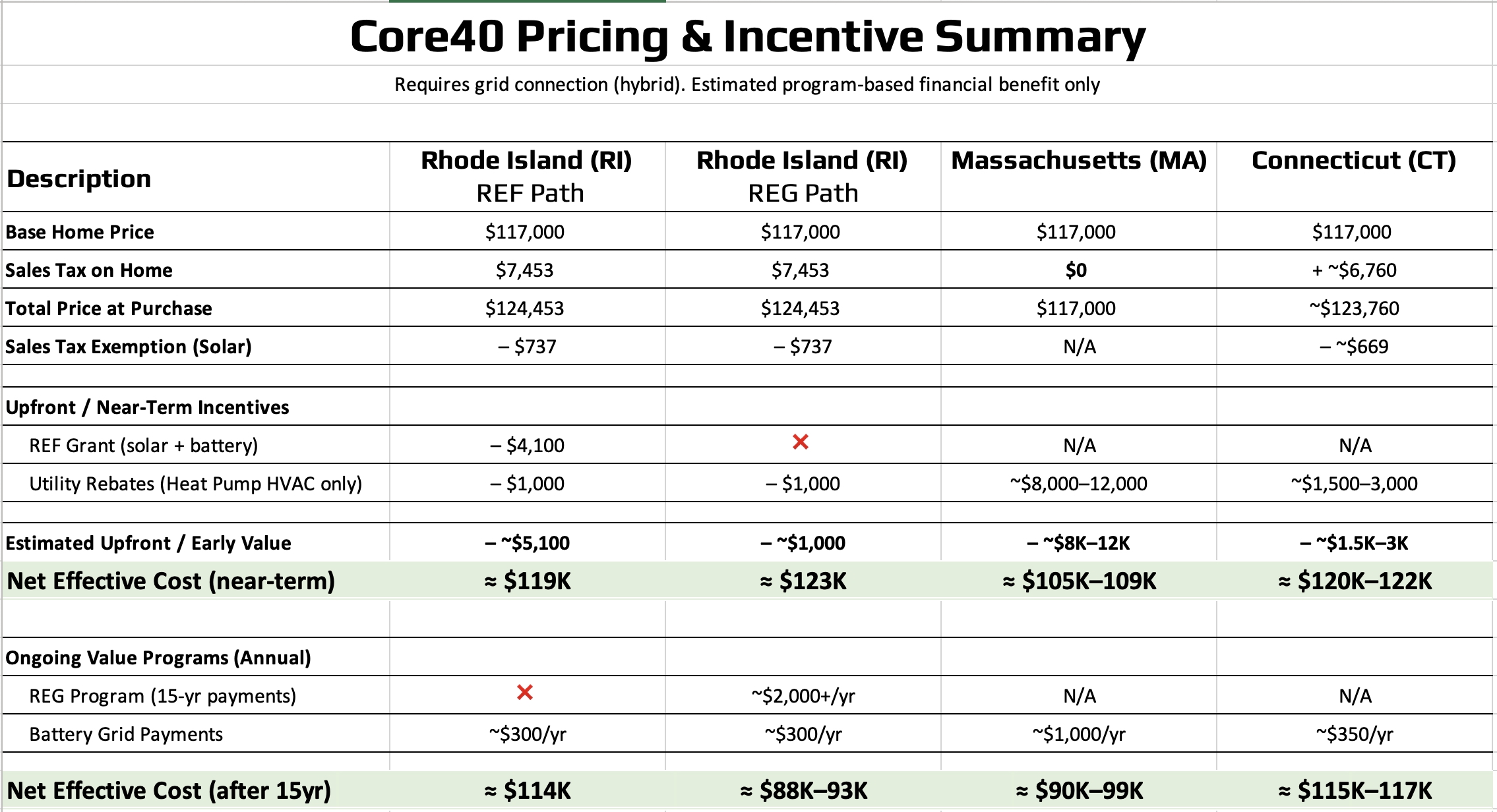
In Rhode Island, a grid-connected system may qualify for state and utility incentives, and can participate in net metering programs that help reduce or offset your energy costs over time. Incentives and savings vary, so we can guide you to the most up-to-date programs available.
What upfront incentives are available for the solar system?
Rhode Island offers strong solar incentives that can significantly reduce your upfront cost, including state grants, utility rebates, and sales tax exemptions. If you’re purchasing as a rental or investment property, the Federal Investment Tax Credit (ITC) may also apply—consult your tax advisor for details.
For the latest programs and estimated savings, visit our energy incentives page.
How does the heating and cooling system work?
Is it expensive to run? Your CS home uses a ductless mini-split heat pump one of the most efficient heating and cooling systems available. It produces 2.5 to 4 times the heating or cooling energy for every unit of electricity it uses. There’s no ductwork to maintain, clean, or repair. Annual maintenance is simple: clean the filters yourself a few times a year and schedule a professional inspection annually ($150-$350). The system is expected to last 15 to 30 years longer than a typical central AC unit.
How well insulated is the home?
Very well and it’s certified to exceed Rhode Island’s energy code. The Core40 uses closed-cell spray foam applied directly to the steel walls, ceiling, and floor. This creates a continuous, seamless thermal barrier with no gaps, no air infiltration, and no thermal bridging. The Core40’s insulation values: Ceiling: R-60, Walls: R-21, Floor: R-30, with near-zero air infiltration.
What about plumbing and electrical – anything unusual to maintain?
No. Plumbing and electrical systems in a CS home are standard residential grade and maintained the same way as any other home. There are no container-specific quirks to worry about. Your tankless propane water heater has a 20-year lifespan and runs approximately $108/year less in energy costs than a traditional tank heater. Annual maintenance is a simple flush most homeowners can do themselves.

Durability, Maintenance & Weather
How long does a container home actually last?
The engineering projection is 30 to 50 years with proper maintenance comparable to a well-built traditional home. It’s worth being honest: container homes have only been used as residences for about 15-20 years, so no home has yet reached its full projected lifespan. What we do know is backed by decades of corten steel science. With the protection system in every CS home, you’re building on solid ground.
Will my home rust?
Not when it’s built and maintained properly. Every ContainerSolutions home uses a multi-layer protection system designed to keep moisture and oxygen away from the steel:
• Factory-applied marine-grade primer
• Sherwin-Williams industrial protective topcoat
• Closed-cell spray foam insulation (which acts as an interior moisture barrier)
This combination is similar to what’s used in marine and industrial environments to significantly slow corrosion.
Like a car or a metal roof, long-term durability depends on keeping protective coatings intact. Areas such as cut edges, seams, and penetrations are sealed during construction and should be periodically inspected over time.
With proper application and basic maintenance, container homes can perform reliably for decades—even in harsh environments.
What maintenance does the exterior need?
Inspect the exterior coating once a year and spot-touch any chips or scratches. Plan for a full recoat every 7 to 12 years similar to repainting a wood-sided home, but less frequent. If you’re in a coastal location close to the ocean, inspect more often. The interior spray foam requires no maintenance under normal conditions.
What are the typical annual maintenance costs?
Container homes run meaningfully lower in ongoing maintenance than traditional stick-built homes.
| Category | CS Home | Traditional Home |
|---|---|---|
| Roof | $0–$100/yr | $200–$500/yr |
| Heating & cooling | $150–$350/yr | $200–$400/yr |
| Exterior coating | $100–$300/yr | $100–$400/yr |
| Plumbing | $50–$100/yr | $100–$300/yr |
| Electrical | $50–$100/yr | $100–$200/yr |
| Other systems | $50–$100/yr | $50–$100/yr |
| Total annual | $400–$950 | $750–$1,900 |
Will I ever need to replace the roof of the Core40?
Almost certainly not within your lifetime of owning the home. The container roof is factory-welded corrugated steel with a projected service life of 40 to 70 years. There are no field-installed fasteners – everything is welded at the factory – so there’s nothing to loosen, lift, or leak over time. Maintenance is limited to cleaning and the same exterior recoating schedule as the walls.
How does a container home hold up in a New England winter?
Very well. Steel has been used reliably in New England buildings, bridges, and infrastructure for over a century. The closed-cell spray foam insulation acts as a thermal buffer between the heated interior and the steel shell, reducing the stress of freeze-thaw cycles on the structure.
How does a container home handle severe weather?
Container homes use a rigid corten steel structure originally engineered for extreme loads and harsh environments. When properly anchored and engineered to local building codes (such as ASCE 7 wind standards), they can be designed to perform in high-wind regions, including hurricane-prone areas.
Their steel frame and low profile can offer advantages over traditional wood framing, particularly in resisting structural deformation. However, overall storm performance depends on proper reinforcement of cut openings, secure anchoring, and the use of appropriate doors and windows. Standard residential windows and doors are typically the most vulnerable components and may require replacement after a severe storm.
Does storm resilience affect my homeowners insurance?
It can work in your favor, but it depends on how the home is built and certified. Steel construction can improve fire resistance and structural durability, which insurers consider when pricing risk. However, premiums are driven more by overall wind mitigation features—such as anchoring, roof performance, and rated windows and doors—than by framing material alone.
Some insurers may offer modest savings for well-engineered homes, but the best approach is to get quotes and ask specifically how construction type and wind mitigation features are being evaluated.

Air Quality & Healthy Living
Why does CS advertise ‘healthy air’ as a feature?
Because most homes including most container homes built by other companies are not designed with indoor air quality as a priority. Our homes were designed with indoor air quality as a priority. Four design decisions work together to create a genuinely healthier indoor environment: All-steel interior framing, Closed-cell spray foam, Energy Recovery Ventilation (ERV) system, and Built-in air quality monitoring.
Why is steel framing inside the walls a big deal?
Most container home builders – and virtually all traditional home builders – frame interior walls with wood. Wood absorbs moisture. When moisture and warmth combine inside a wall cavity, mold can start developing within 24 to 48 hours. CS uses steel framing exclusively. Steel does not absorb water, does not rot, and cannot support mold growth. This isn’t just a construction detail it’s the reason your home’s indoor air quality won’t degrade over time the way wood-framed homes can.
Does the home have ventilation?
Yes. Every CS home includes an Energy Recovery Ventilation (ERV) system. This brings in fresh outdoor air continuously while recovering up to 85% of the thermal energy from the outgoing exhaust air so you’re not paying to heat or cool the fresh air you’re bringing in. The ERV runs quietly in the background. You’ll have better air quality than most conventionally built homes while using less energy to maintain it.
Your Learning Resources for Container Living
Everything you need to know about Container Homes. Explore our frequently asked questions, downloadable guides, and interactive resources to experience smart and sustainable homes.
Your Learning Resources for Container Living
Everything you need to know about Container Homes. Explore our frequently asked questions, downloadable guides, and interactive resources to experience smart and sustainable homes.

Resale & End of Life
What happens if I want to sell the home someday?
A properly permitted CS home on a permanent foundation is classified as a site-built custom home using non-conventional materials. It can be listed, sold, and financed like a traditional home. Comparable sales data for container homes is growing nationally – especially in Texas, Arizona, and Colorado but is still developing in New England. Work with an appraiser familiar with non-conventional construction, and your CS team can provide documentation, NTA certification, and comparable references to support the valuation process.
What happens to the home at the very end of its useful life?
You have good options none of which involve simply bulldozing it. In order of economic preference: Relocate it, Repurpose it, or Scrap the steel. Compare that to demolishing a stick-built home, which costs $10,000-$34,000 and produces a pile of mixed materials with minimal salvage value.

Honest Answers - What We Don't Know Yet
Is there anything about container homes that isn’t fully proven yet?
Yes, and we’ll tell you plainly. Container homes are a relatively young residential product roughly 15 to 20 years of real-world use. A few things are based on engineering projections rather than long-term field data: Structural lifespan beyond 20 years, Long-term insulation performance, and New England comparable sales. We believe you deserve this honesty. The fundamentals are strong – the materials science, the corrosion data, the code approvals, and the real-world performance we’ve observed are all solid. We just won’t overstate what hasn’t been proven yet.