

We Caught Our Own Smart Home Lying. Here’s Why We’re Glad We Did.
What an inexpensive air quality sensor taught us about building a genuinely healthy home, and why we’d rather show you the messy truth than a clean marketing number.
Here’s a strange thing about modern life. We check the weather before we walk out the door. We read the labels on our food. But the air inside our own homes, where we spend something like 90% of our lives, most of us never think about at all. By one estimate, nearly 87% of homeowners don’t even realize the air indoors can be dirtier than the air outside. And actually measuring it? That’s a tiny niche today: a handful of offices, labs, and curious enthusiasts.
For now.
We think that’s about to change. Tomorrow Starts NOW. And at our Core40 model home, we didn’t wait for the rest of the world to catch up. We instrument the home around the clock, because you can’t honestly call a home “healthy” if you’re not measuring it. And a few weeks ago, all that monitoring tried to scare us.
The afternoon the numbers spiked
The Core40 is built around a simple idea: a healthy home isn’t a gadget you buy, it’s a system you engineer. So we don’t guess about the air; we log it, continuously, and we actually read the data. That’s not normal for a house, and that’s exactly the point.
One afternoon, after a couple of back-to-back property tours, the monitor lit up. Formaldehyde, it insisted, had shot up to alarming levels. Its carbon dioxide number jumped too. On paper, it looked like a small group of visitors had briefly turned a 320-square-foot home into an air quality incident.
Here’s the thing: we didn’t believe it. And when we dug into the data, we found out we were right not to.
One sensor wearing six costumes
When we pulled the raw logs apart, a pattern jumped out. The “formaldehyde” reading and the “VOC” reading weren’t two independent measurements. They moved in perfect lockstep, hour after hour, month after month, locked to a fixed ratio. That doesn’t happen with two real sensors. It only happens when one number is calculated from the other.
So we looked up the device. Sure enough: this class of inexpensive monitor contains a single low-cost gas element, and it estimates carbon dioxide and formaldehyde from that one signal. They aren’t separate sensors. They’re one sensor, doing math, wearing six costumes.
The best part? The manufacturer already knew. Printed right on the box, in the fine print, was a quiet confession:
“The test data of this product is for life reference only, and it is not a professional test equipment.”
That “alarming formaldehyde spike” was never a formaldehyde measurement at all. It was one cheap element reacting to a room full of people, and the device’s software inflating it into a scary-looking number. A false alarm: the sensor that cried wolf.
Why we’re telling you this
We could have quietly swapped the sensor and said nothing. Plenty of companies would. But the whole reason the Core40 exists is a belief that homes should be honest: with the people who live in them, and about how they actually perform.
A healthy home can’t be built on numbers you can’t trust. If we’re going to tell you the Core40 protects the air you breathe, we owe you real evidence, measured with real instruments, not a reassuring green light from a gadget that disclaims its own readings.
So we’re replacing that monitor with the real thing: a dedicated laboratory-grade carbon dioxide sensor, a true electrochemical formaldehyde sensor, and a proper particulate sensor. One instrument per measurement, nothing derived from anything else. All of it runs locally, in the home, with no cloud account and no subscription, the same way the rest of the Core40’s smart systems do.
And this is where the story gets good, because the home doesn’t just watch its air anymore. It acts on it. When the air genuinely needs freshening, the Core40 now turns on its fresh-air ventilation automatically: health first, even ahead of saving a little energy. We didn’t design that on a whiteboard and hope. We found the gap by reading our own data, and we engineered the home to close it on its own.
This is just the beginning: meet Anima
Think about what your body does without asking you. It senses rising carbon dioxide in your blood and makes you breathe. It sweats to cool you, shivers to warm you. Biologists call it homeostasis: a living system sensing its own state and correcting to stay in balance. The Core40 now does the same thing, and the system that runs it is called Anima.
Anima is the home’s local brain: the sensors, the solar array, the battery, the heat pump, the ventilation, all working as one, quietly, inside the home, with no cloud account and no subscription. It gives the house something like a nervous system and a set of reflexes. It senses, and it corrects.
Here’s the idea that has us excited. The same readings that tell the home when to freshen the air also tell it when energy is abundant and when it’s precious. Anima ties those together. When the sun is strong and the battery is full, the home leans into that free power. When reserves get tight, it eases off, unless your health comes first, in which case clean air and comfort win, every time. Efficiency by default, health when it counts, and you never have to think about any of it. Exactly like breathing.
That’s the thread we’ll keep pulling in the posts ahead: a home that senses its own state and keeps itself in balance, running on its own sunlight, getting a little smarter the more it learns about how you actually live in it. Real data, real automations, shared as we go, including the first honest numbers from our new instruments.
Healthy isn’t a feature. It’s a system, and an honest one.
The lesson we took from a lying low-cost sensor is the same principle the whole Core40 is built on: the best smart home isn’t the one with the most gadgets. It’s the one that quietly, honestly takes care of the people inside it, and can prove it.
We’re about to have real, instrument-grade data on exactly how the Core40 breathes. When we do, we’ll publish it here, the good and anything that surprises us, because that’s the only kind of “healthy” claim worth making.
Want to see the home that’s honest enough to catch its own smart sensor lying? Come tour the Core40.Tomorrow Starts NOW
A Smarter Way to Build Housing
Built faster, designed better, and engineered for long-term performance—this is housing reimagined.

Affordable
Predictable cost. Efficient design. Lower total cost of ownership.

Sustainable
Reuse of containers. Reduced waste. Energy efficiency.

Smart
Powered by Home Assistant Green. Local. Private. Intelligent.

Healthy Living
ERV ventilation. Air and water quality monitoring. A healthier home by design.

Storm Resilient
Steel structure. Stronger than traditional. Built for extreme conditions.

Solar
Solar-ready. Battery capable. Supports off-grid living.

Fast
Factory-built. Weeks, not months. Move-in ready on delivery day.
Our Models
ContainerSolutions focuses on truly scalable configurations that allow rapid, assembly-line like production for a wide variety of applications.

Pod20
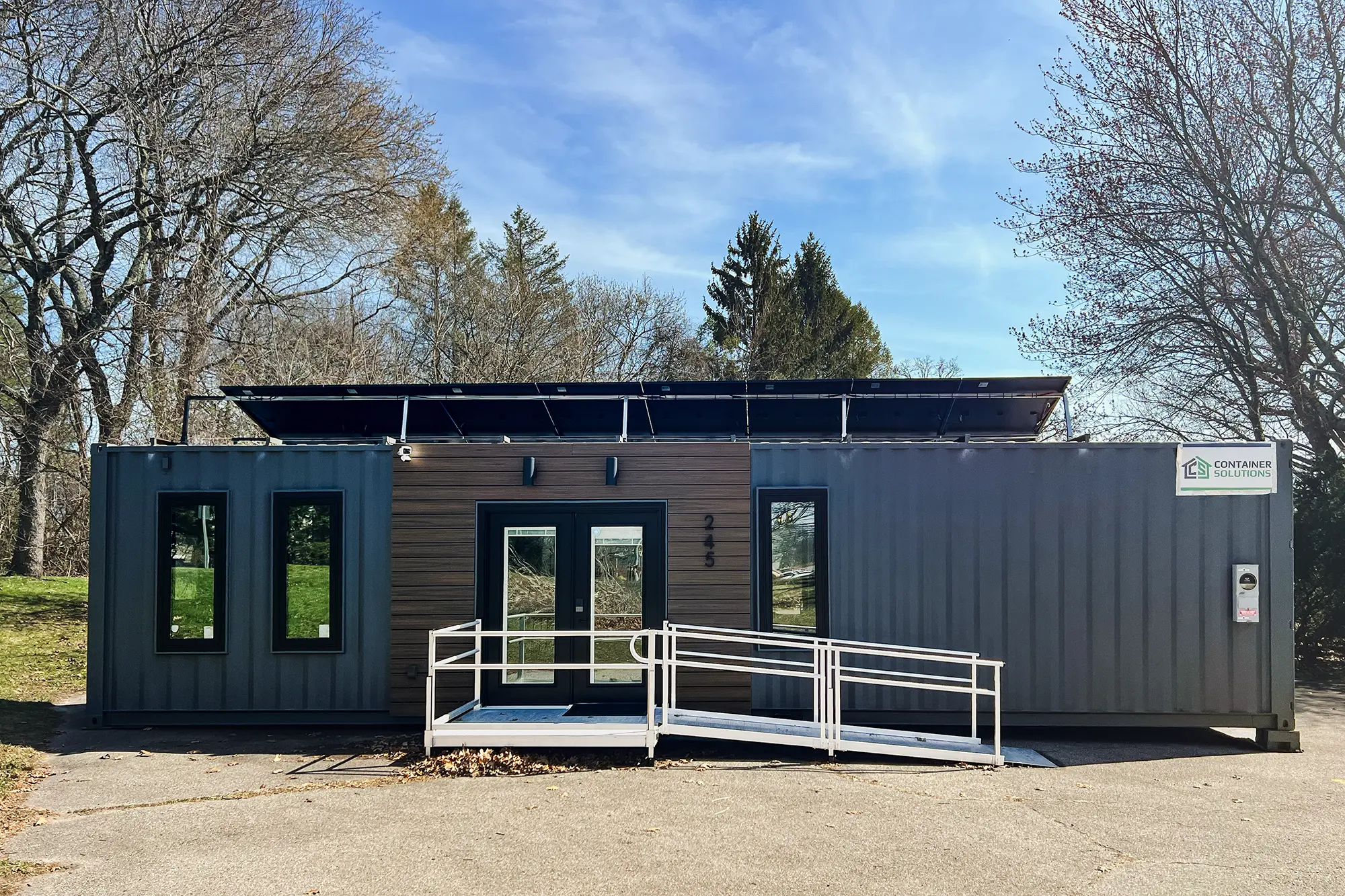
Core40
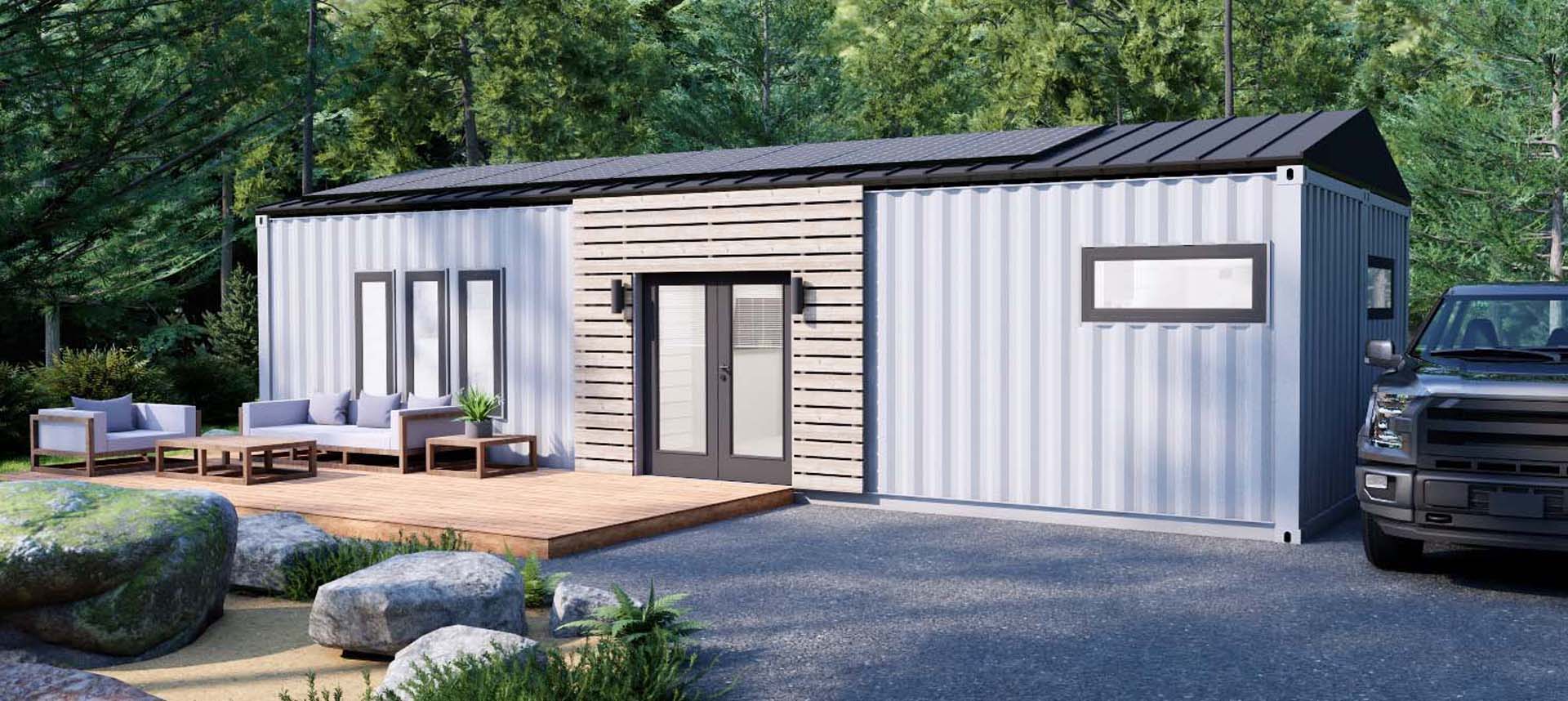
Flow80
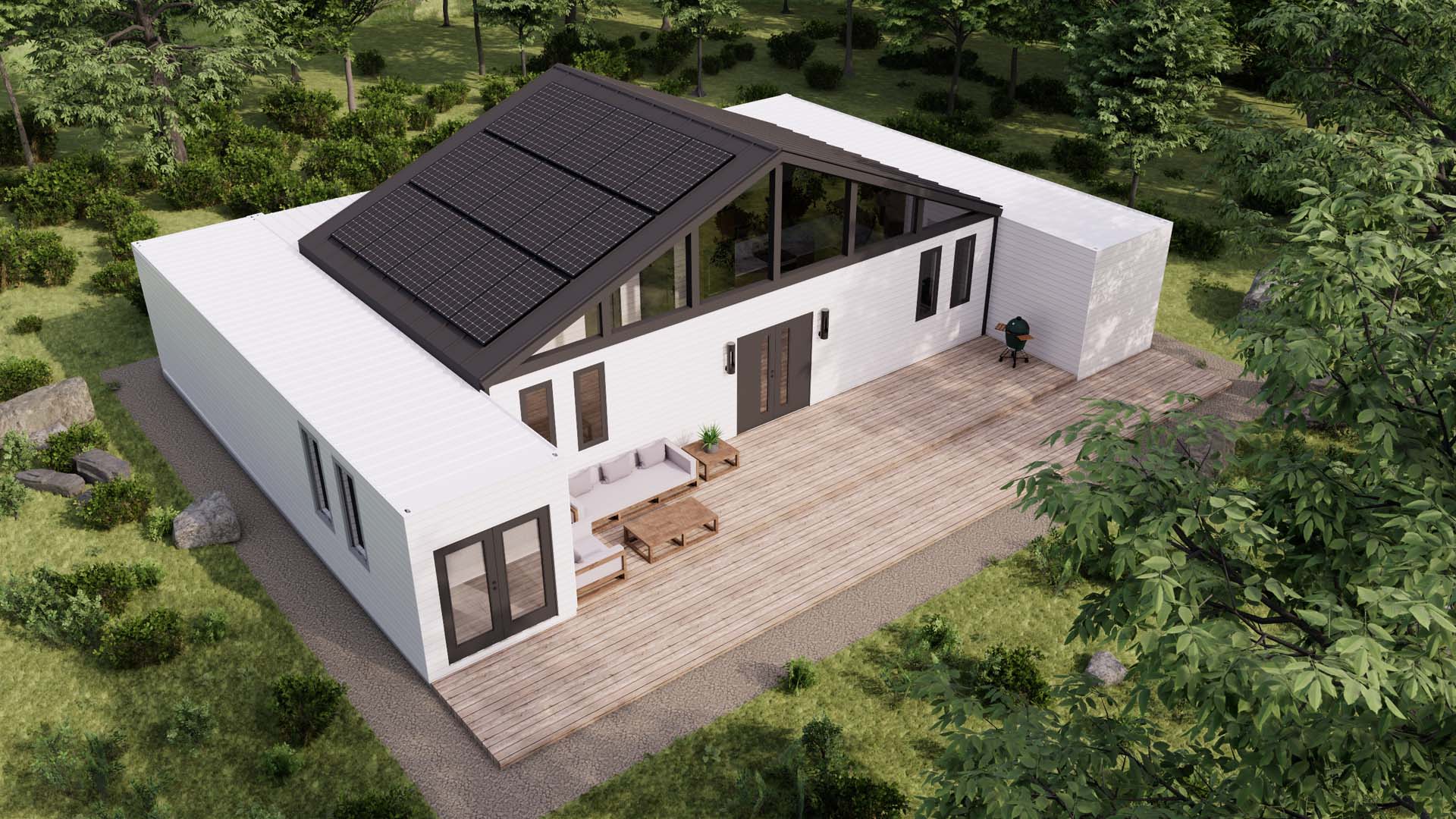
Cove120
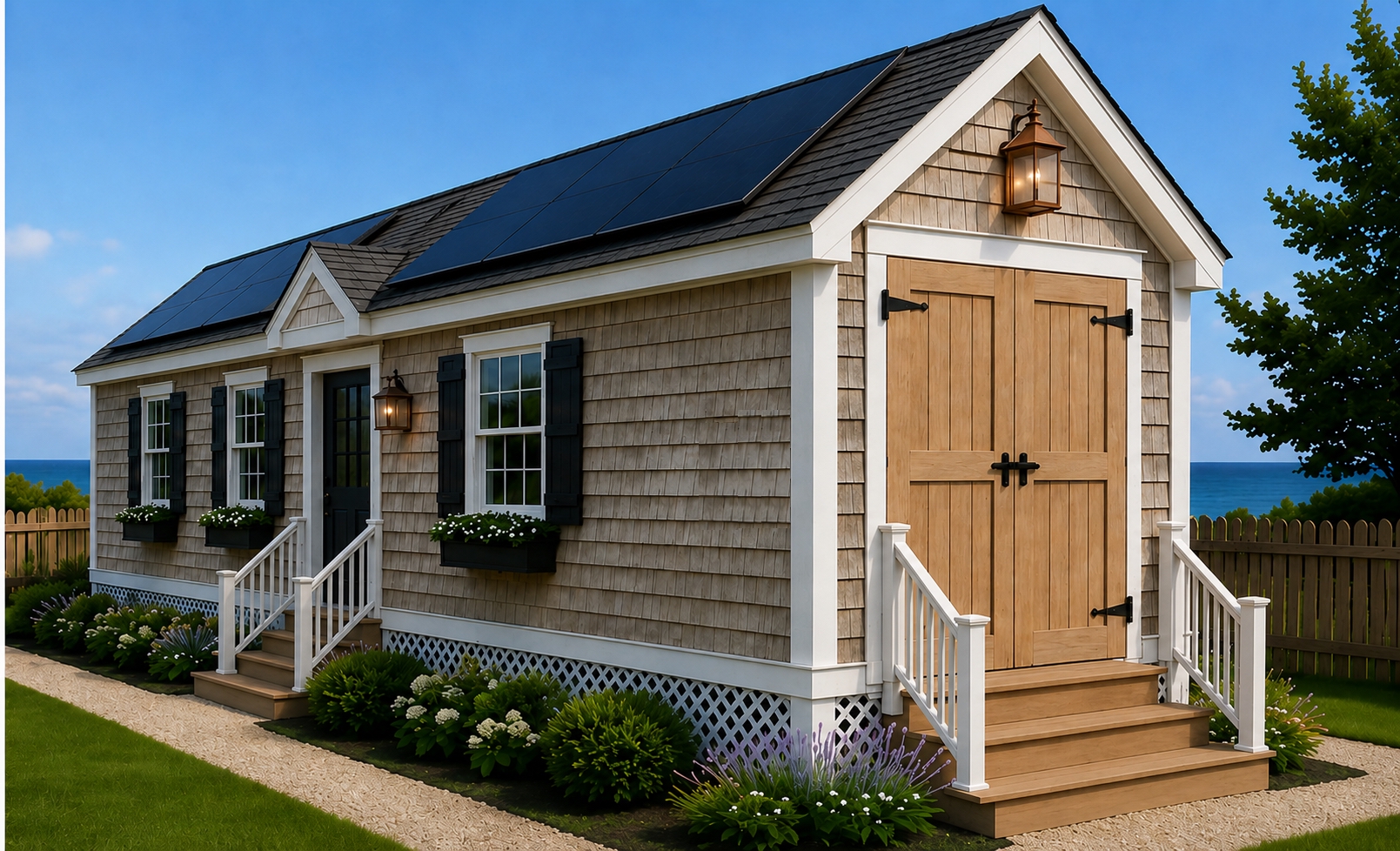
ACK40
Ready to Plan Your Project?
- (401) 903-0432
- East Providence, RI
To arrange a detailed quote, zoning analysis, or to book a tour of our flagship model located in East Providence, Rhode Island - check out our getting started page.
Have a quick question?
Ask us anything—we’re here to help. For prospective buyers, ask about our free Zoning & Site Review. We research your property's zoning, setbacks, and permitting requirements — and deliver a written report so you know exactly where you stand before committing to anything.